OT and IT live apart
Plant systems are engineered for safety and determinism; enterprise systems for integration. Bridging them without compromising either is the core challenge.
Sector 03
Make the plant floor and the boardroom speak the same language.
Connecting operations, engineering and enterprise data to improve throughput, resilience and sustainability.
The context
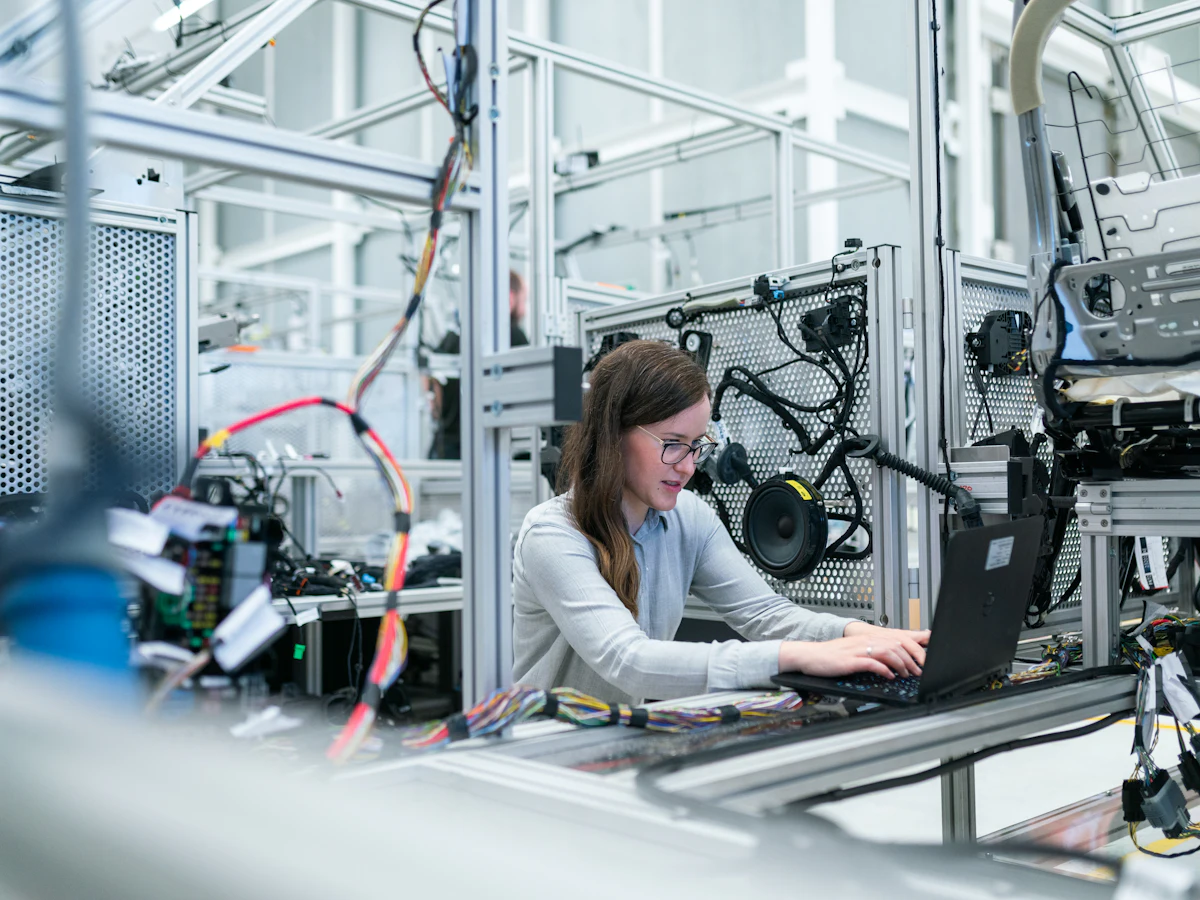
Manufacturers are caught between volatile supply, energy costs, skills shortages and the imperative to decarbonise. The plant floor holds much of the answer, but operational technology and enterprise systems have evolved separately.
We connect OT and IT safely, modernise the platforms that surround production, and build analytics that operators trust. The aim is practical: less unplanned downtime, faster changeovers, better quality and a clearer view of energy and material use.
Our teams work alongside plant leadership and engineers. Solutions that cannot be operated by the people on shift are not solutions.
The pressure points
The obstacles are rarely isolated to a single function. They are systemic, and they compound.
Plant systems are engineered for safety and determinism; enterprise systems for integration. Bridging them without compromising either is the core challenge.
Sensor data is plentiful but poorly modelled. Without asset context and process knowledge, analytics produces noise rather than insight.
Demand shifts, component shortages and logistics disruption require faster replanning than legacy planning cycles allow.
Energy and emissions data must become auditable and actionable, not an annual spreadsheet exercise.
How we help
We combine sector knowledge with engineering depth to solve the problems that determine competitive position — and to leave the capability behind.
Secure OT connectivity, edge processing and asset models that make production data usable.
Condition-based models that prioritise intervention and reduce unplanned stoppages.
Simulation of production lines and supply scenarios to test decisions before committing capital.
Simplified core processes and integrated planning across supply, production and finance.
Role-based mobile tools that put instructions, quality checks and escalation in the hands of operators.
Where the opportunity is
The shifts we believe will separate leading organisations from the rest over the next three years.
Detect defects earlier using vision and process signals, with feedback loops that improve the line.
Gradually shift routine scheduling and adjustment decisions to governed systems with human oversight.
Make energy a live operational variable, optimised alongside throughput and quality.
Connect supplier, production and logistics signals into one planning view.
Technology landscape
We are independent of platform vendors. These are the technologies our teams know deeply in this sector — selected for fitness, not for a partner quota.
Explore our services Logistics
Case study
Atlas Logistics
One field operations platform replaced four legacy tools, lifted driver adoption to 96% and increased productivity by 31% across 3,200 vehicles.
Related industries
Sector perspective
Tell us what is changing in your organisation. We will bring sector experience, engineering depth and an honest assessment of what it will take.